The Pacific Ocean Collection
Ceramics
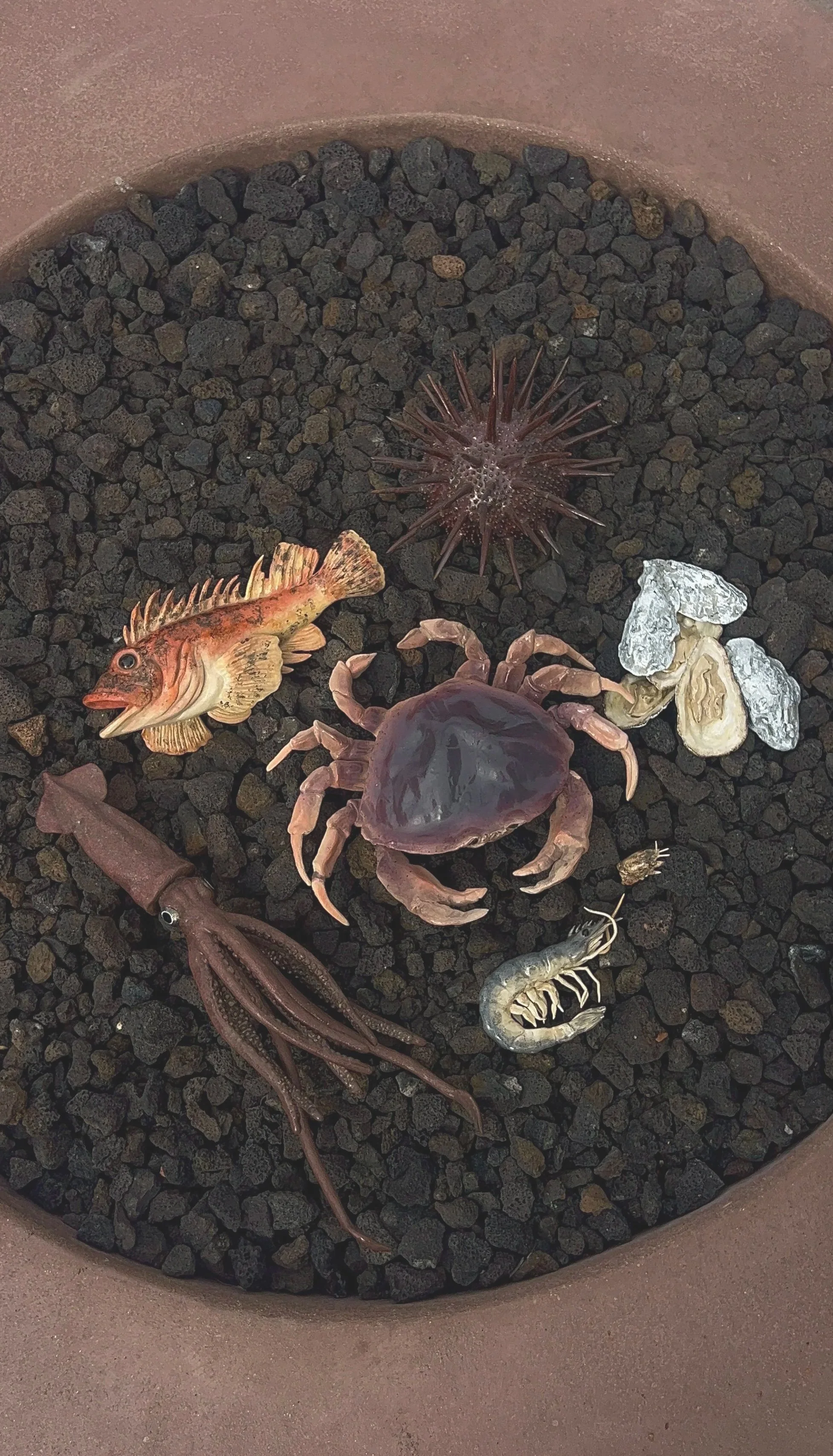
This collection is my love letter to Southern California’s marine life.
I’m fascinated by the wild textures in our local tidepools and love the challenge of turning something fragile like a shrimp's antennae into a permanent ceramic sculpture. As the Studio Manager at Ceramic Heights, my process is a mix of fine art and clay science, requiring a lot of patience to keep these delicate shapes from collapsing in the kiln.
Everything is hand-sculpted and fired to Cone 5–6. I love using B-Mix for its incredible plasticity and how well it handles highly intricate details. To hit that hyper realistic look, I layer underglazes, clear glazes, and different Amaco glazes to recreate those organic colors and fresh out of the water finishes
Pacific Whiteleg Shrimp
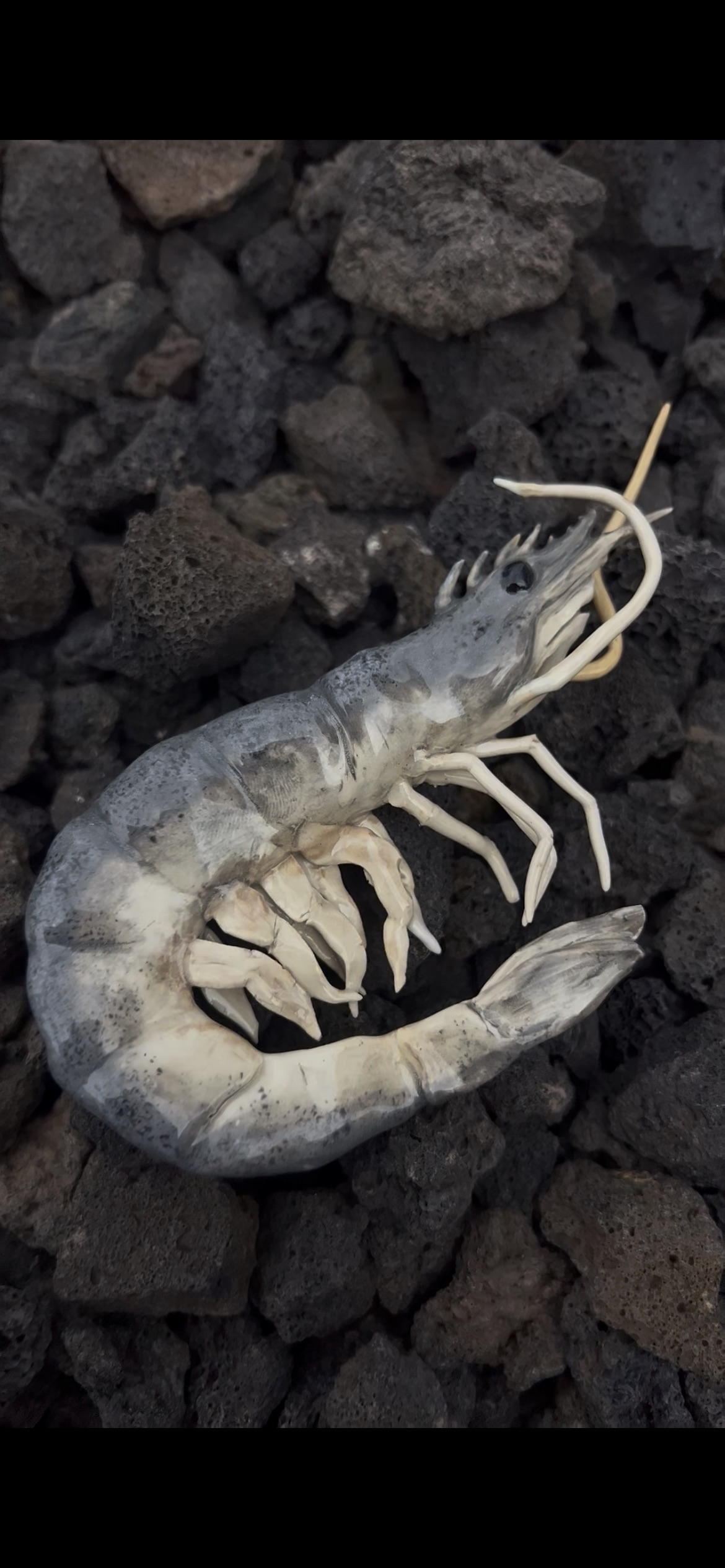
B-mix clay, underglazes, glaze
Litopenaeus vannamei
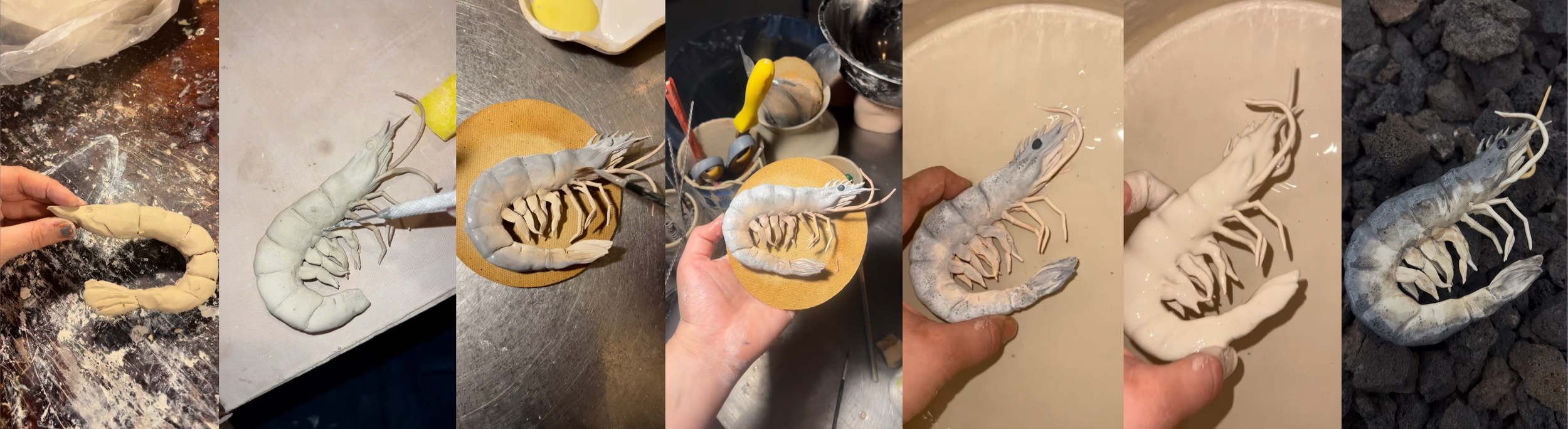
A look into the process behind my Pacific Whiteleg Shrimp. I started by shaping a simple baseline form out of B-Mix clay, gradually building up the details to capture all the intricate, life-like textures of the shell and legs. Before sending it to the bisque firing, I hand-painted the piece with underglazes to get those subtle, natural color transitions, and finished it off with a clear glaze. The final look gives it that perfect, realistic wet sheen right out of the water.
Year
05/15/2026
Colossal Squid
Mesonychoteuthis hamiltoni
B-mix clay, underglazes, glaze
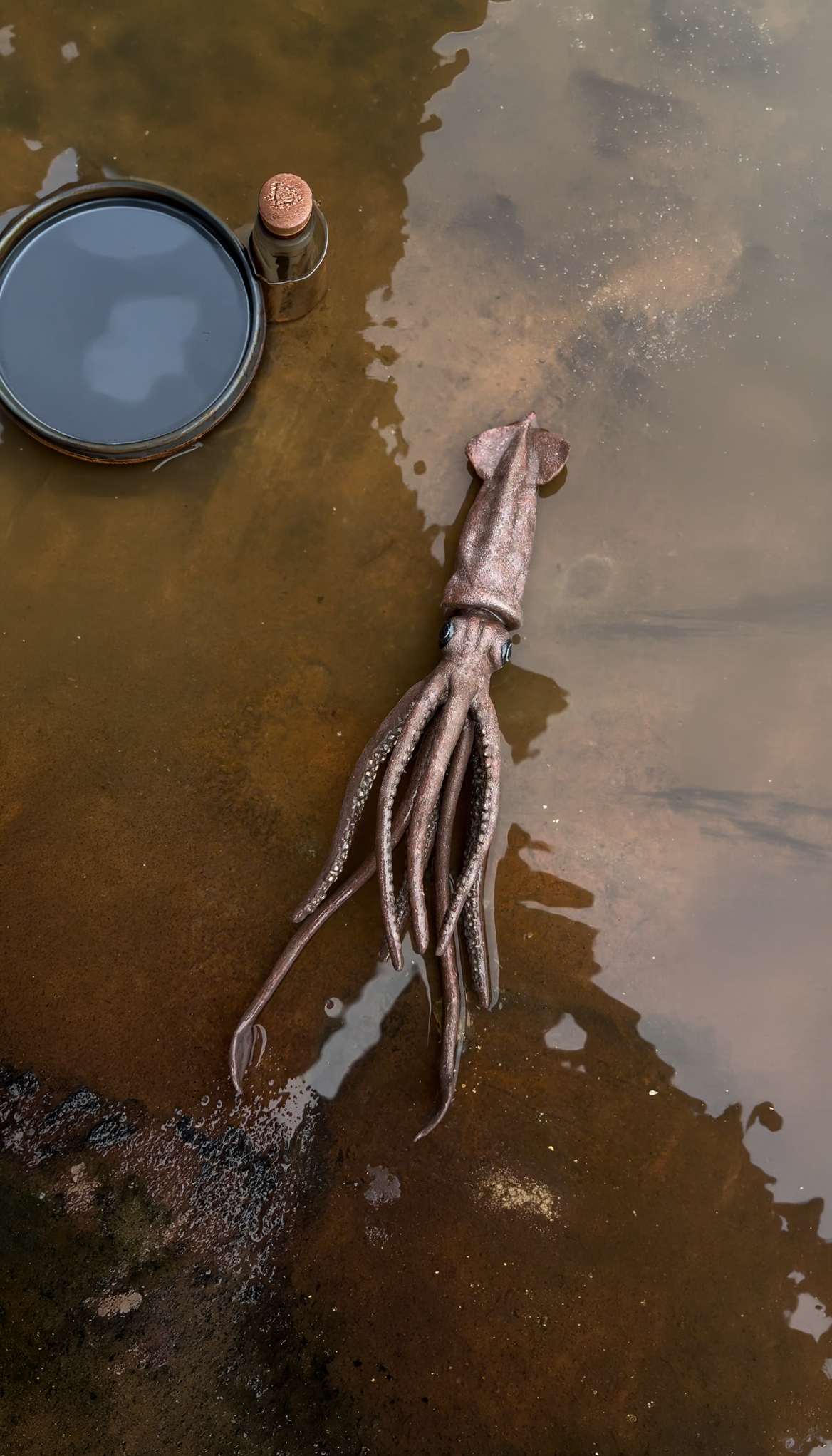
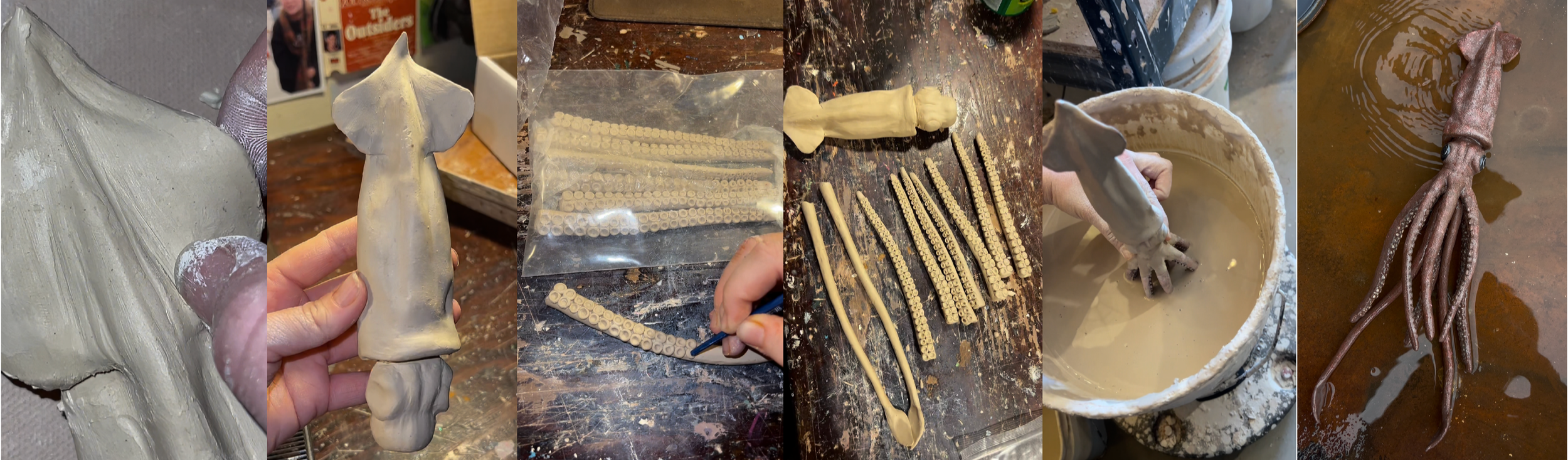
A look into the process of creating my Colossal Squid. I started by sculpting the main body out of B-Mix clay, carefully shaping the mantle and fins before diving into the incredibly detailed work of crafting each individual tentacle and suction cup by hand. After assembling the pieces and bringing the form to life, I used natural-toned underglazes to give it depth and realistic color variation. A final clear glaze coat gives it that fresh, glossy sheen, making it look like it just surfaced from the deep ocean.
Year
11/01/2025
Dungeness Crab
Metacarcinus magister
B-mix clay, underglaze, glaze
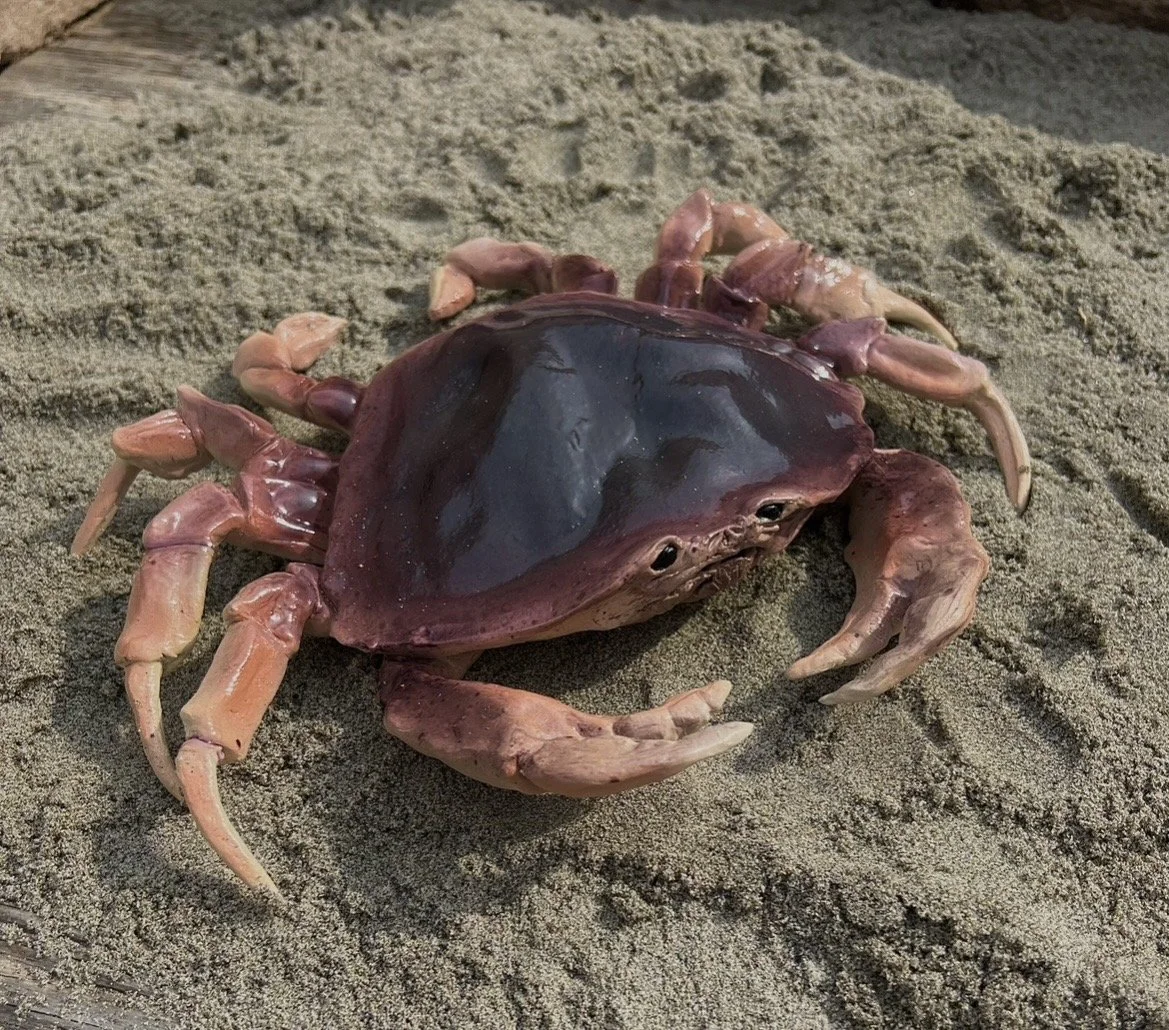
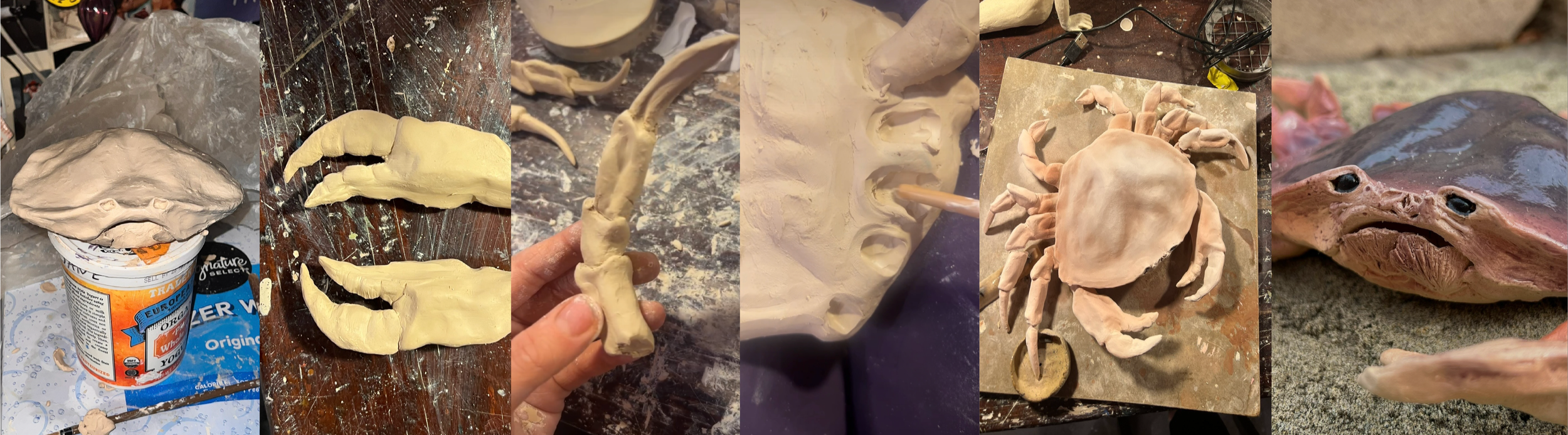
The process behind making my Dungeness Crab. I began by shaping the main carapace out of B-Mix clay, then moved on to sculpting the claws and legs as separate pieces to get the joints and proportions just right. I used a loop tool to hollow out the undersides of the leg sockets, allowing me to seamlessly attach everything into a natural, life-like stance. After painting on underglazes to recreate those realistic, earthy crab tones, a final clear glaze gave it a fresh, glossy finish that brings the whole piece to life.
Year
07/12/2024
Purple & Black Sea Urchin
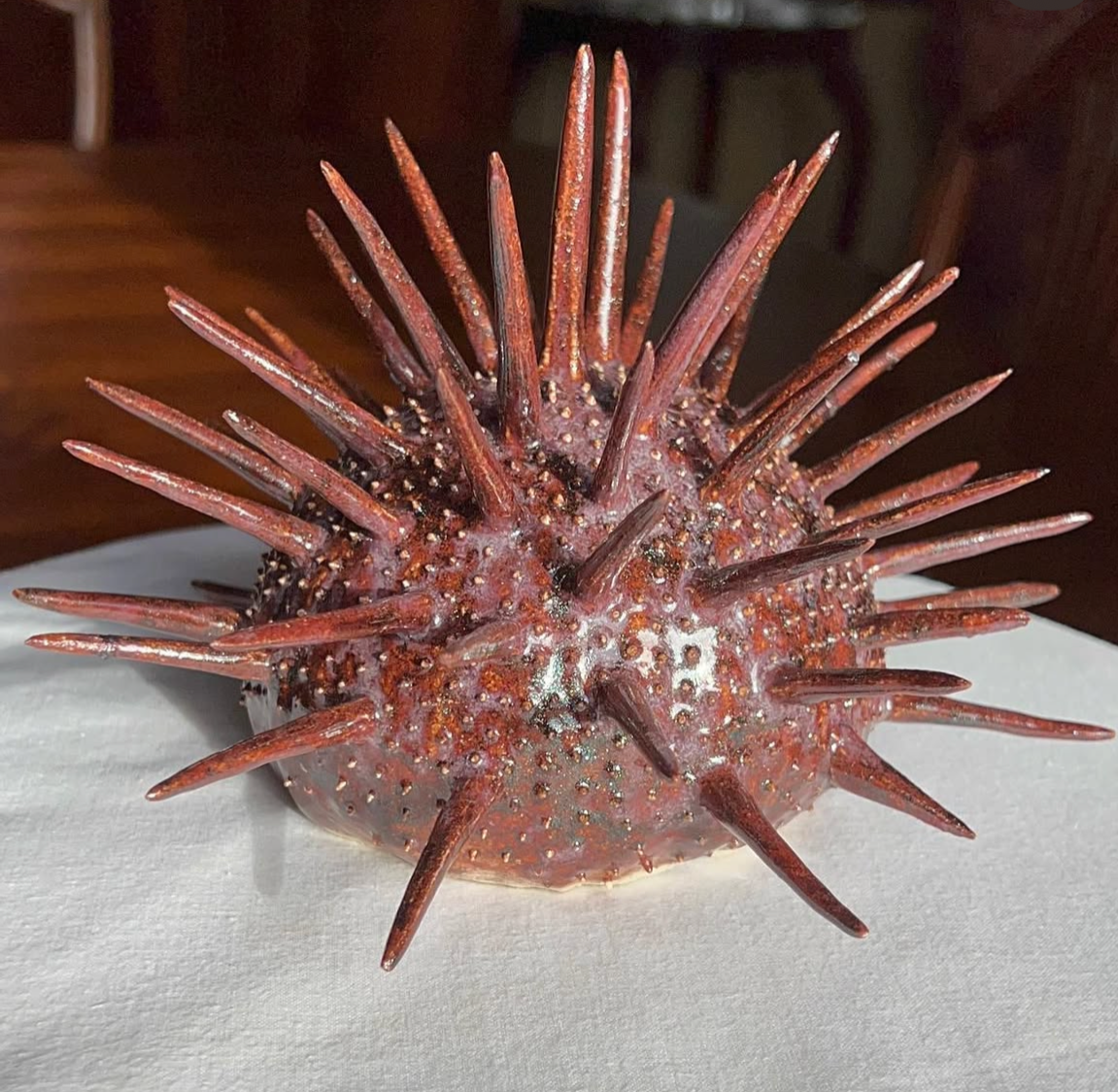
Diadema antillarum
Strongylocentrotus purpuratus
B-mix, Amaco glaze
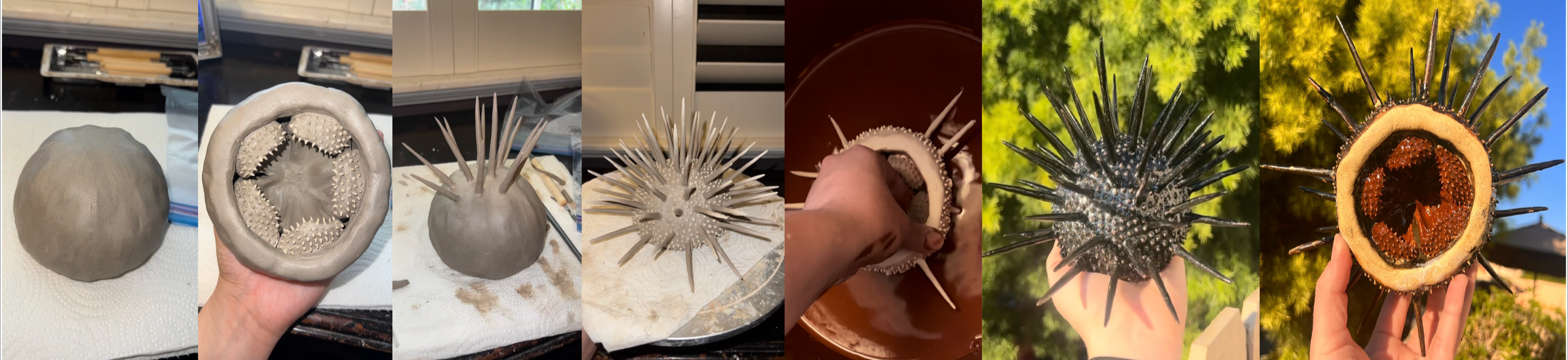
A look into the process behind my Purple & Black Sea Urchin. I started by shaping the hollow main body out of B-Mix clay, attaching individual, hand-tapered spines to get that realistic, defensive structure. For the interior, I used a slip-trailing bottle to pipe on the incredibly fine texture for the reproductive organs, giving them an authentic, organic feel. Instead of underglazes, I experimented with layering a mixture of Amaco glazes—including Cosmic Tea Dust, Smoky Merlot, and Obsidian—to capture those rich, dark tones and the unique iridescent shimmer of a wild urchin.
Year
11/08/2023
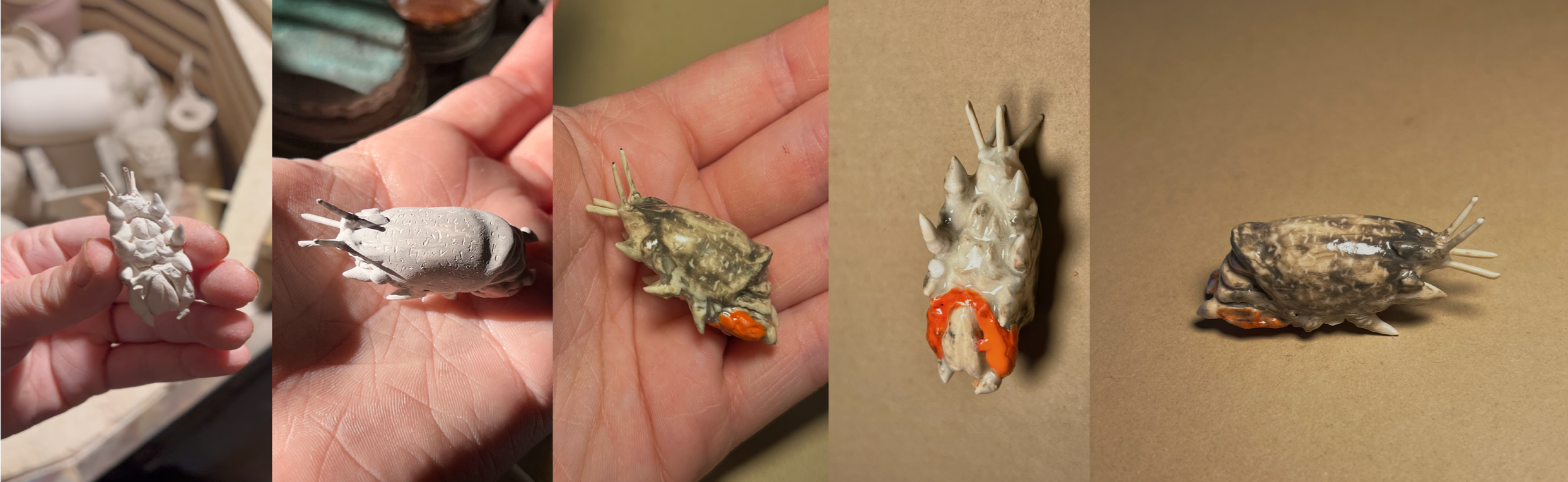
Pacific Sand Crab
Emerita analoga
B-mix, underglazes, glaze
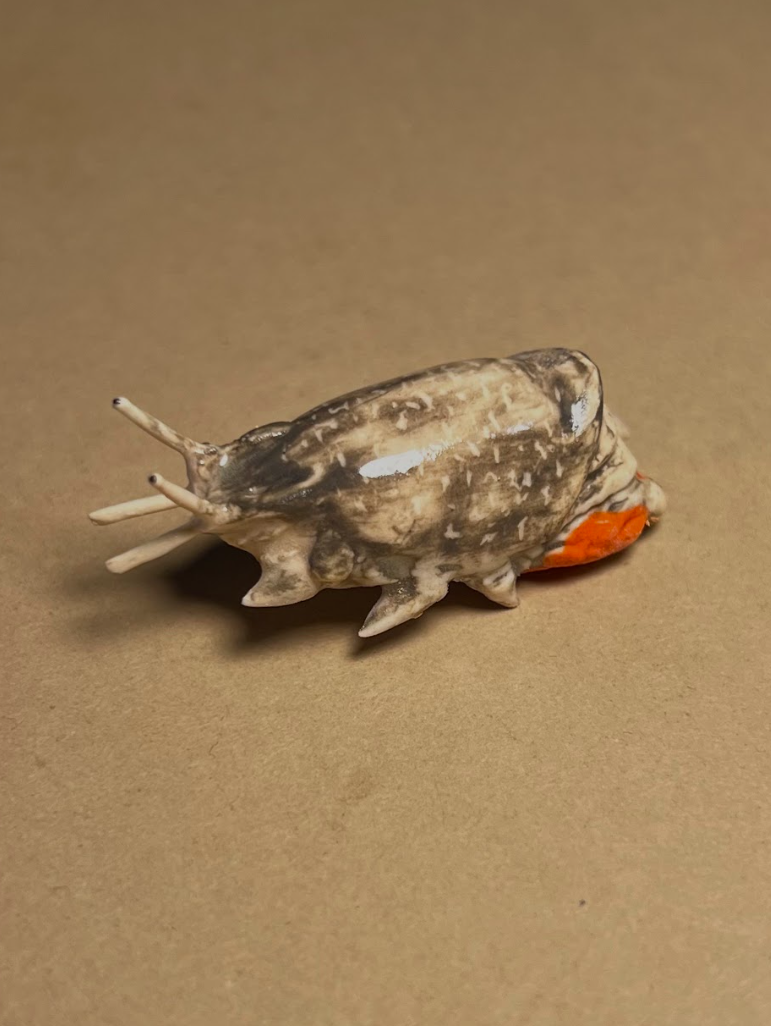
The process behind making my Pacific Sand Crab. I sculpted the small, rounded carapace out of B-Mix clay and carefully attached the tiny, specialized legs and antennae designed for digging. On the underside, I made sure to sculpt and paint a bright orange egg mass to capture a natural, life-like detail you'd see in the wild. I used realistic, sandy underglazes to give the shell its camouflaged look, finishing it off with a clear glaze to create that wet, glossy sheen of a sand crab fresh out of the surf.
Year
12/20/2024
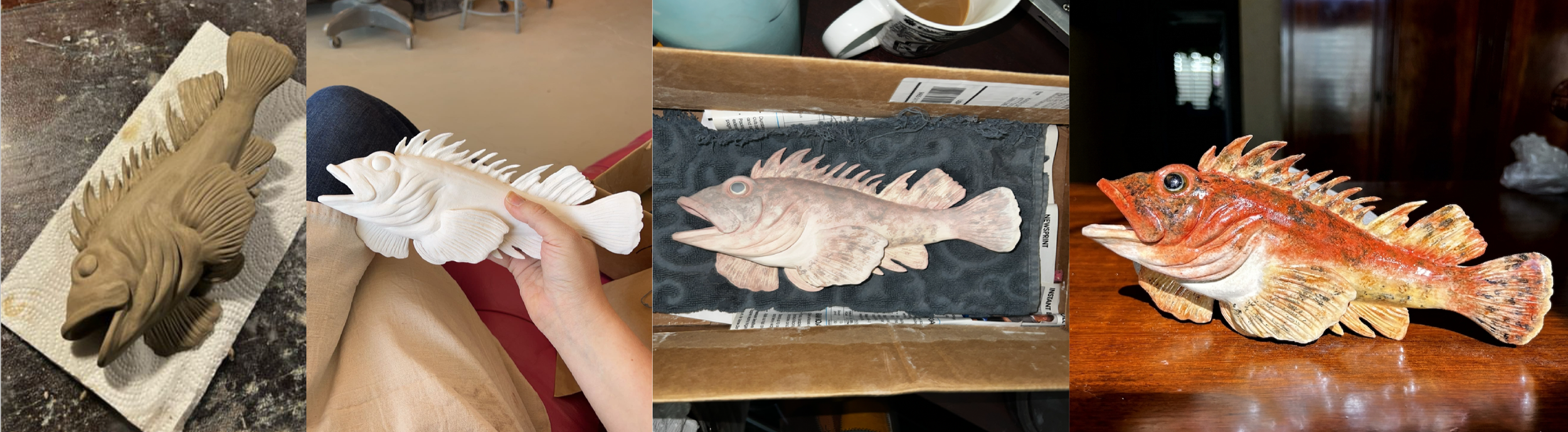
Vermilion Rockfish
Sebastes miniatus
B-mix, underglazes, glaze
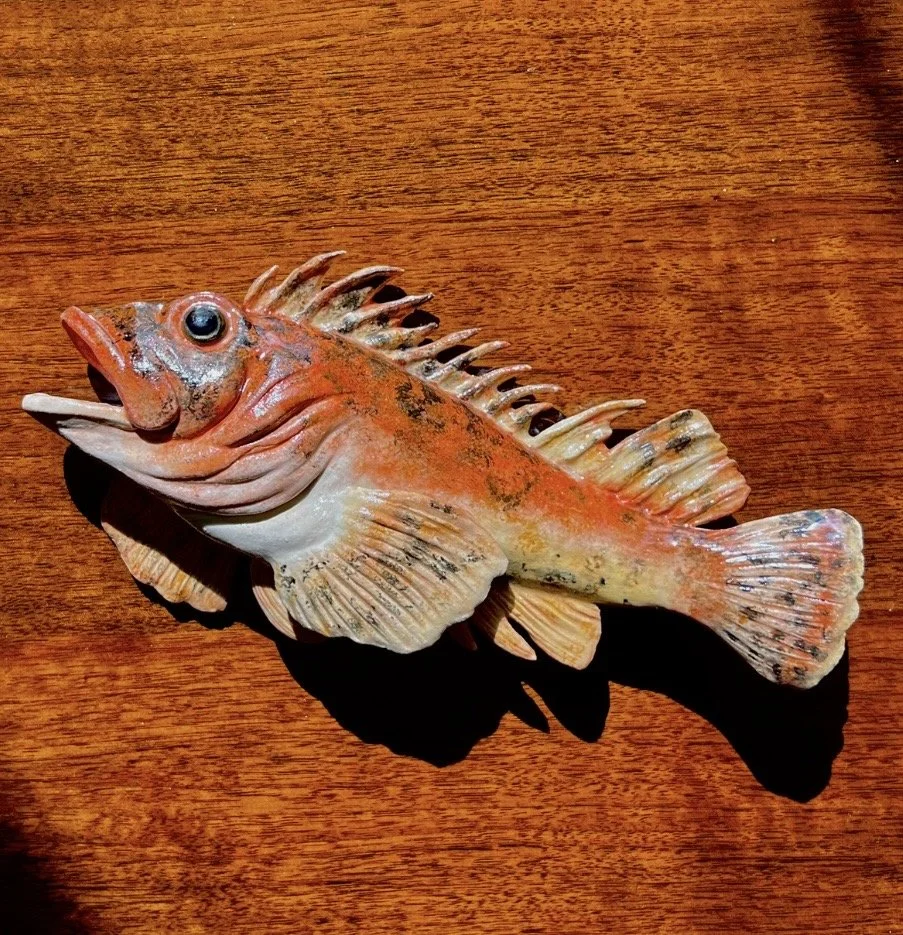
The process behind making my Vermilion Rockfish. I started by shaping the thick, prehistoric body profile out of B-Mix clay, carefully carving the rugged facial structure, open mouth, and flared gills. From there, I meticulously sculpted the sharp, spiny dorsal fins and detailed pectoral fins to give it a realistic sense of movement. Before the bisque firing, I used a mix of deep red, orange, and dark underglazes to capture that natural, mottled camouflage pattern, finishing it with a clear glaze to bring out the vibrant colors and give it a fresh-out-of-the-water sheen.
Year
07/25/2023
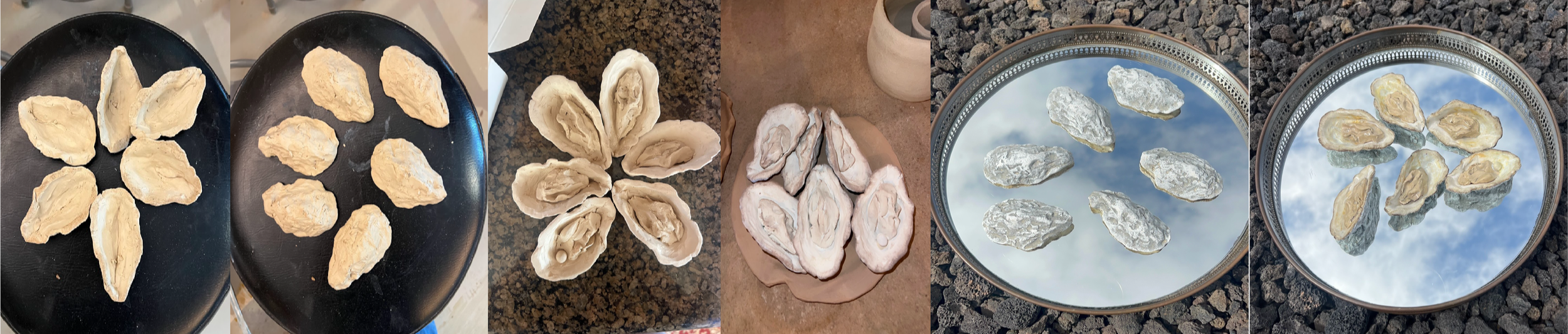
Pacific Oysters
Crassostrea gigas
B-mix, underglazes, glazes
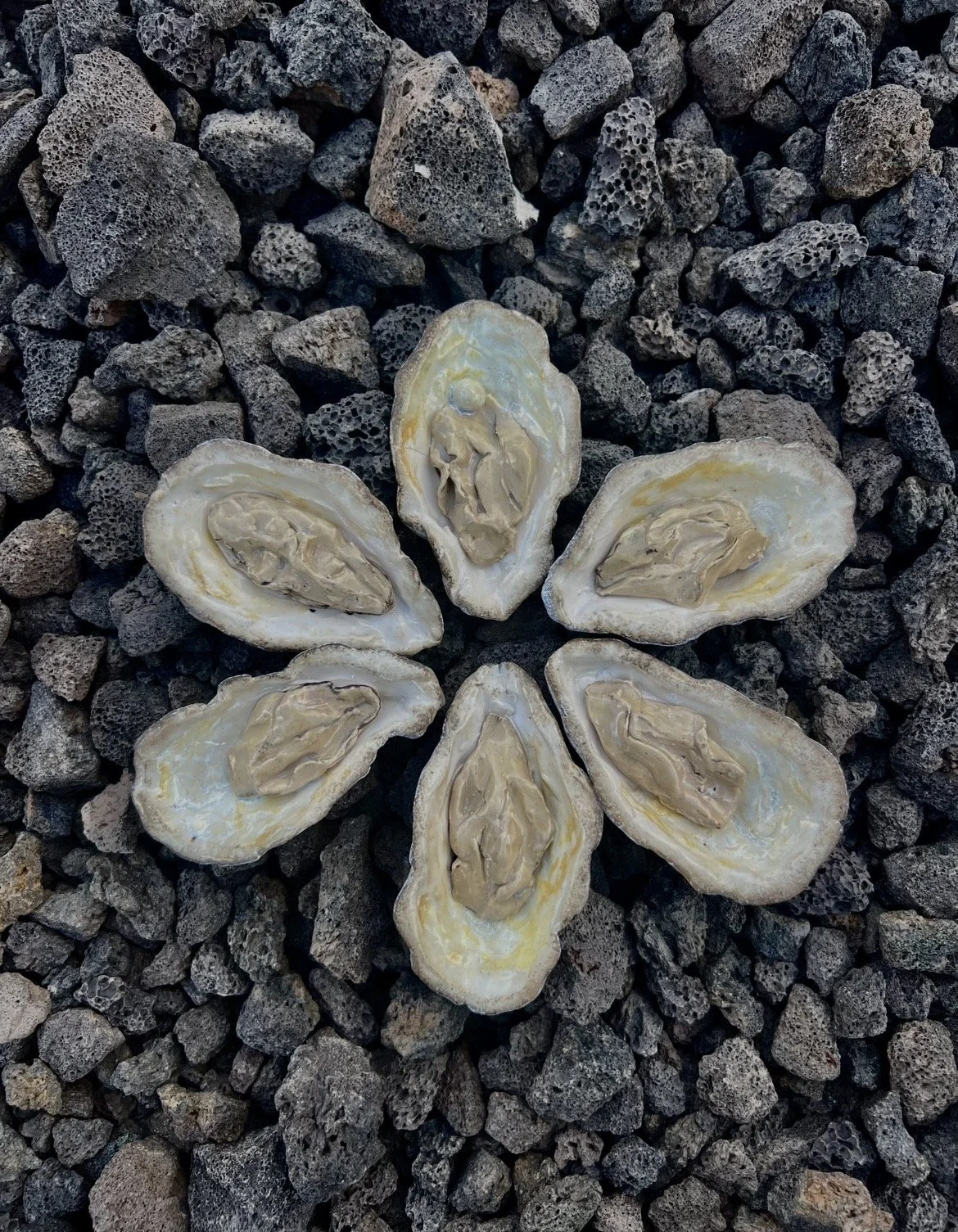
The process behind making my Pacific Oysters. I hand-sculpted the rugged, fluted outer shells out of B-Mix clay, capturing those signature jagged edges and deep, irregular ridges. For the interior, I carefully smooth-sculpted the delicate, soft body of the oyster nestled inside the cup of the shell. I used natural, earthy underglazes to get the subtle transitions of cream, gray, and dark accents, then finished them with glazes that give the inside that perfect, glossy, freshly-shucked wet appearance contrasted against the rough exterior.
Year
10/25/2025